Friday, April 8, 2011

'Counter-Terror' Policy Targets Uyghurs

2011-04-07
A new report says China uses the threat of terrorism to crack down on Uyghurs in Xinjiang.

AFP
Uyghur men and women chat outside a mosque in Urumqi, July 17, 2009.

China's anti-terrorism policy deliberately targets ethnic minority communities such as Uyghurs and Tibetans struggling for greater autonomy, according to a white paper by a rights group.

The policy equates terrorism with groups pushing for more self-governing rights, is too broad in scope, and shirks international human rights commitments, said the Hong Kong and New York-based Human Rights in China (HRIC).

The paper looked into human rights concerns within the Shanghai Cooperation Organization (SCO), a regional intergovernmental organization which includes China and five other member states-Kazakhstan, Kyrgyzstan, Russia, Tajikistan, and Uzbekistan-with a total population of 1.5 billion people.

It said the SCO approach to counter-terrorism, modeled on China'sThree Evils doctrine, and highlighting principles of territorial integrity, noninterference in internal affairs, and social stability, contributes to supporting repressive regimes at the expense of human rights.

A failure to demand accountability from the SCO undermines the effectiveness and integrity of the international system in countering terrorism and advancing rule of law, peace, and security, HRIC said.

"China's approach to counter-terrorism is the Three Evils doctrine, and it links terrorism with separatism and extremism," HRIC director Sharon Hom said in an interview.

"This Three Evils approach is overbroad, highly politicized, and while not exclusively applied only to ethnic minority groups, it is regularly applied to Uyghurs and Tibetans in its practice."

Hom said other SCO member states follow China's lead by recognizing Xinjiang and Tibet as inalienable territories of China and repatriating its ethnic minorities who seek asylum within their borders.

"China has enormous clout in the SCO, and you can also see it in the ways in which the other SCO member states and the SCO will completely parrot China's line and China's policy on these two so-called autonomous regions."

Treatment of Uyghurs

The HRIC white paper said it found "serious issues" concerning China's treatment of Uyghurs, including the principle of non-refoulement and potential use of torture during interrogations.

Regulations specific to Xinjiang became part of China's domestic counter-terrorism legal framework in December 2009 when provincial-level lawmakers revised the region's Comprehensive Management of Social Order.

Through the revisions, Chinese authorities were ordered to specifically crack down on the three threats of "terrorism, separatism, and extremism" in the aftermath of the July 2009 ethnic violence in Urumqi which left hundreds dead, according to official media reports.

HRIC called the amendments "unique" to Xinjiang, adding that "such singular focus by the Chinese government ... suggests that the concept of terrorism has been applied in a biased fashion, with the Uyghur community the subject of intense scrutiny and suspicion."

It noted that while China does face real threats of terrorism, "the limited involvement of Uyghurs in terrorist acts cannot serve as justification of widespread repression throughout [Xinjiang] or the labeling of peaceful Uyghur activists under the rubric of the Three Evils."

Adherence to rules

But despite its reliance on the Three Evils doctrine, HRIC wrote, China continues to claim that it is acting to "firmly uphold and fulfill the resolutions of the United Nations General Assembly and the Security Council," according to a statement by the Chinese Ministry of Public Security (MPS).

Under U.N. rules, China pledged to oppose the "arbitrary widening" of the scope of fighting terrorism and identifying terrorism with any specific ethnic group or religion.

"The Three Evils doctrine undermines this principled approach and, in doing so, compromises human rights guaranteed under international law, and international counter-terrorism efforts as a whole," HRIC said.

HRIC recommended that Beijing narrow its "Three Evils"-based approach to national security and reformulate its definition of terrorism.

On June 24 last year, Chinese authorities announced they had broken up a "terrorist" ring of a Uyghur separatist group, the East Turkestan Islamic Movement (ETIM), after arresting more than ten of its members involved in an alleged major plot against China.

The announcement said that information leading to the arrest had been obtained through the investigation of 20 "individuals of Chinese citizenship" who had been deported to China on December 20, 2009-the exact date that Cambodia deported 20 Uyghurs seeking asylum following the July 5 ethnic unrest in Urumqi.

The statement also indicated that several of the alleged ETIM members had confessed to participating in a wide array of terrorist activities during interrogation.

Human Rights Watch said in February that the Cambodian government has a "dismal track record" of deporting refugees granted asylum status by the UNHCR, particularly those from neighboring countries such as China and Vietnam.

Ethnic tensions

Millions of Uyghurs-a distinct, Turkic minority who are predominantly Muslim-populate Central Asia and the Xinjiang region.

Ethnic tensions between Uyghurs and majority Han Chinese settlers have simmered for years, and erupted in riots in July 2009 that left some 200 people dead, according to the Chinese government's tally.

Uyghurs say they have long suffered ethnic discrimination, oppressive religious controls, and continued poverty and joblessness despite China's ambitious plans to develop its vast northwestern frontier.

Chinese authorities blame Uyghur separatists for a series of deadly attacks in recent years and accuse one group in particular of maintaining links to the al-Qaeda terrorist network.

Reported by Mamatjan Juma for RFA Uyghur service. Written in English by Joshua Lipes.
Copyright © 1998-2011 Radio Free Asia. All rights reserved.


Roofing West Vancouver Issues

Vancouver Roofing

In Vancouver special care is required whenever obtaining a estimate for any home. A roofing company in Vancouver needs to know exactly what they're coping with when getting your roof off. Unexpected costs are a typical scenario in Vancouver and each owner ought to be ready

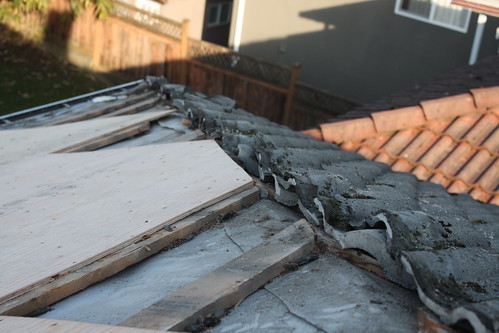
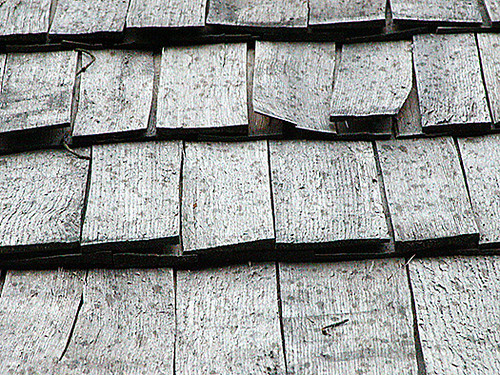
Heritage- becoming among the earliest areas within the GVRD you can understand that there are some fairly aged homes. With a steep message roof, probably near 12/12 message which essentially indicates Forty five degree position roof. The original roofing was cedar tremble sitting on taping. I don't know if it was being lazy or the tradition, in the event that people were trying to save money but if you have this roofing you most likely got several layer on the top. The initial is still upon and 2 additional layers sit over the actual cedar shake. I have run into house where five layers sat along with the house. Based on building code now days a Vancouver Roofing company must eliminate all levels if your brand new roofing will be positioned over. A person folks often spend more due to the steepness, the few layers associated with roofing, the plyboard deck and also the trouble. You may be 2 feet out of your neighbors

Vancouver Roofing

Reduced Downward slope -- Vancouver unique homes operate throughout East Vancouver. The actual minor problem with these types of houses in regards to roofing is that fewer and fewer roof covering businesses out there do tar as well as tiny rocks. The choice you've is actually flashlight on or steel. Asphalt tiles cannot go on these houses. Your own pitch is to reduced and asphalt most likely wouldn't last ten years. Vancouver Roofing companies which have been in the commercial associated with torch on for more than 10 years are probably reliable. Ice and snow build up on these rooftops cause small pools to build up in your roofing as well as cause main seeping, always keep the actual rain gutters and downpipes obvious.


vancouver roofing by consumerschoiceroofing

Low Downward slope or even High Downward slope cedar tremble -- Within Vancouver this really is common about the West aspect. There is not much to say of Cedar in Vancouver. There was a long period with the 60's, 1970's and Eighties whenever Vancouver Roofing businesses weren't setting up cedar. The majority of Cedar roofs tend to be brand new construction. cedar is the 1 product that the majority of problems can be determined prior to the function begins

Reduced Slope or even High Slope Asphalt roofing -- If you have asphalt roofing and it was not transformed in the last ten years then you have a good outdoor patio. Since the 1970's asphalt came into the market. Along with brand new building shiplap or also known as tongue and dance was the only option of the strong outdoor patio. Shiplap techniques a lot in the winter and in summer time so plyboard should be split lower by the roofer


Roofing within Burnaby

Roofing in Burnaby might have its problems and also the best way to go through them all would be to work through North in order to South starting towards the top of Burnaby. Within Northern Burnaby the hillsides begin to slope as well as decrease to some fairly powerful angles. The big challenges I've found here are front yard steepness and use of the house, even though this might not seem like a issue for you it's a really major problem for a roofer that has to hand have your old roof upward the slope and hands have your brand-new roof down a slope.

The hard, a downward slope region in this area stored building contractors aside and for that reason you've houses that were all built through individually hired construction companies. There are several servings of Northern Burnaby which have little contractors homes all built collectively however as far as which Central Burnaby offers. North Burnaby has much more fascinating constructed designs as well as rooftops making a golf ball park determine estimate in this region pretty difficult.

Burnaby Roofing

Main Burnaby is where large construction businesses with a standard architectural way of creating the house was pretty busy throughout the 70`s as well as early 80`s. Having a shiplap outdoor patio being the only option and asphalt tiles becoming the option and positioned on a home. These days shiplap is the roofers adversary because of the fact that the tiles nowadays are not designed to use shiplap. Attempting to convince main Burnaby they need to re-deck the roof along with plywood has often been overlooked and for good cause.

The quality of shiplap has elevated levels of this particular region with many from it which i know of becoming between 6 as well as 8 in . which is ideal. Other than that this particular a part of Burnaby is fairly easy to roof along with access not an issue all that often along with a clear style in sloped roofing that is clear to see. A lot of Vancouver specials centered here in order to with torch upon becoming the number one choice from the unique tar residue and gravel choice. Cedar rooftops often sprinkle the east side of the region with many converting to asphalt

Southern Burnaby has a tendency to possess bigger rooftops which are scattered with asphalt as well as cedar tremble. Cedar tremble roofs in this area are usually through homes around 20 years aged. This particular house has a tendency to transform right into a asphalt roofing and most possess okay access but some do not and also the rooftops aren't everything in order to steep. Some asphalt roofs down here actually have plywood patio's that is usually a big saving idea for any property owner


Roofing West Vancouver

West Vancouver is a area of valley's as well as side rails, high drive-ways and concealed roofs. This is often a roofers headache however there are roofing companies who work in the region and understand what these people most likely might be coping with. In contrast to other cities within the Metro Vancouver area, big construction businesses did not buy large monitors of land as well as build patterned suburban cul-de-sacs. They are doing exist but to a much smaller diploma than other metropolitan areas. Consequently you'll find in one street Twenty houses just about all built differently. I suppose because of the property scenery it was the only way to get homes built in some areas.

There was certainly a growth throughout the 70's through the shear number of shiplap patio's available. The majority of rooftops in West Vancouver that need a replacement are asphalt rooftops that sit on a shiplap outdoor patio. They shingle is normally the interlock shingle which was made for shiplap however no more obtainable in the higher Vancouver region. The majority of property owners within West Vancouver tend to be understanding that they now require a plyboard deck to cover the shiplap.


Cedar Shake Roof by joefolz

Several Cedar roofs exist in West Vancouver but not a lot that requires replacing. Most twenty year old cedar tremble rooftops in West Vancouver have been changed which means you find a cedar roof here and there. Changing cedar along with cedar isn't the all to typical practice and most Cedar roofs have been in brand new construction.

West Vancouver Roofing

Vancouver special offers aren't all to typical within West Vancouver. Torch on as well as tar residue as well as tiny rocks is available although not suggested. The rain and blowing wind tends to be a bit more extreme within West Vancouver, with the large quantities associated with trees and the possibility of a heavy snowfall drop steel is a higher suggestion.

Getting a roofing estimate in West Vancouver can be quite different than the individual living right on the doorstep. if you have the steep driveway, have a roof that is steeper than 30 degrees and also over Two thousand sq ft than you can pay more than $ 3000 than your own neighbor. The kind of roofing as well as quantity of flashing can produce a big difference. Within West Vancouver it is very tough to ball park a cost with this really reason. I suppose you can state based on the little property you live on and also the design from the roofing could make a big difference between a higher estimation along with a low estimate. Roofing entry is a huge issue with a few roofers needing to hands have that old roof more than hundred feet compared to hand transporting the brand new roofing one hundred feet to the house.

Get three estimates to check celery with apples and for the same item, provides you with a chance to educate yourself and ask the right questions. The majority of roofs in West Vancouver is below ventilated so make sure when you get your homes roof estimate you can see if every estimation you get may change your air flow or your brand-new roofing will not final. The additional ventilation isn't a add-on cost so the more the actual better, you cannot have a limit on ventilation. Sapling debris is a issue so maintain your roofing with no damage the rooftop product. leak motorized inflator is probably the greatest form of maintenance.


Thursday, April 7, 2011

Victoria roofing Companies - Altering Multiple rooftops

Victoria roofing companies can save a bit of cash when working on your roofing as well as some of your neighbors. There are lots of cul-de-sac's out there within Victoria where the houses were built simultaneously and all having a cedar or asphalt roofing with similar warranty and environment problems. The house are generally constructed with exactly the same design and also have the same air flow issues so when it's time to replace your neighbors then it is time for you to substitute yours..


Roof tiles by peachesarerottening

Brand new building roofing Victoria two decades ago included about a 20 12 months guarantee. The majority of rooftops start to drip soon after the actual 20 12 months mark and all of a sudden the whole road gets their rooftops replaced. Whenever a Victoria roofing estimator involves your home and you are on good terms together with your neighbours you may might persuade your neighbors to get a roof estimation as well. The majority of Victoria roofing Contractors will offer 2 estimations. One is the estimate if only you were to change a person house alone in the street. The other estimate is for you and the actual neighbors which have chosen the estimate too, if you have persuaded your neighbours to do this.

Victoria roofing Contractors can save money in 2 main places when several roofing. One in the actual shipping cost of the materials is actually reduced whenever a roofing company can get three homes in one shipping. The second reason is the actual wastage, motion of wastage is exactly what is expensive as well as making sure that the actual waste is all relocated together will allow the actual Victoria Roofing Company to lessen the price of your brand-new roofing. Whenever neighbours customize the roofing project carried out together this provides future home owners to do the same in thirty many years when your new roofs obtain old.


Roof tiles by peachesarerottening

Find a very good Victoria Roofing Contractor

I live in Victoria as well as know how hard it is to locate a decent service provider to operate in your house. They all appear real first and they just about all promise you the globe. Unfortunately there are some that really provide upon these types of guarantees.

Roofing companies are no exclusion and want to complete your own due diligence in order to discount the great types from the bad types.

The roof is an important component of any house. Here's your main hurdle of numerous from the components found outside. For those who have the leaking roof you could find yourself placing lots of pans and pots all through your home to catch the water. In case your roof will get truly bad additionally you danger it caving in from some point.

Fortunately if your roofing is actually built the right way it will are a number of decades. There are even some rooftops which are both so great they can last for fifty years.

Finding a dependable roofing company in Victoria and also you need this type of work carried out is actually of the utmost importance. You want someone who is going to give you a reasonable bid, do the job in a timely manner, and use standard or over average materials.

This is actually the goal you just have to fine a roofing to have an region who is ready to get it done.


Roofing And Roofing Contractor In ELLENWOOD, GA by roofinghub


Here are some stuff that I personally would search for and can apply for not just Victoria, however all areas in the country:

I first like to start with recommendations. I understand I am not the only one that has a house and I want to request other people their own viewpoint but had roof covering work carried out before me. Buddies, family members, colleagues, associates, and folks you know will usually not really steer a person wrong. They can use a direct you to an individual who has done a fantastic job for them. Unless a person isn't keen on you they were usually not recommend the roofing company in Victoria who has done shoddy work.

Subsequent, you need to reach least 3 estimations. Roof covering jobs are expensive by nature and also you want a contractor who is going to provide you with a reasonable as well as sensible price. Keep in mind even a reasonable as well as sensible quotation will be high. Comprehend as well that roofing contractors pay a few of the greatest insurance costs from any industry in the country. Since the function done roof covering companies workers comp prices are about 5 times higher than other such as Contractors. It is not out of the ordinary with this kind of company to pay for $30 in workers compensation premiums for every 100 bucks they pay out within pay-roll. These types of costs have to be forwarded to the customer. Therefore, when you get an offer from a roofer understand that a minimum of Thirty to 40% associated with exactly what he is charging you is simply to cover admin as well as insurance costs. A person who submits for you and extremely reduced bet is probably uninsured weren't insured whatsoever.

Every thing should be written about the agreement. Including the materials for use in your house and the time that it will take to set up them. Do not depart something like a verbal agreement. You have to be able to accurately evaluate what you were getting for that cost you're paying making an informed choice. When the estimators arrive they'll attempt to bait you into signing some thing right away. Do not do it. You need 3 estimations, alongside in your table, and also you need to take the time to read them each carefully including the fine print.

Finally, check on a Victoria's roofing companies experience and status. You would like them to have sufficient encounter to be able to get the job done. Brilliantly, you want a company that has been around the block and absolutely nothing may shock them. Should they have existed for at least five years they will have the reputation of possibly doing great function are being people. Some of the best individuals to request the local companies. Even if it is their own competitor a company proprietor had been not often talk poor regarding an additional company unless he or she truly seems he is doing care horrible work. You can also ask roof covering suppliers who believe that is the best. They work with hundreds a roofer's every month and are inside a great position to provide you with within information.

These are the 3 items I would search for when choosing my personal roofing contractor. I am fussy about the individuals I select to work along with and you should end up being picky too. You can't rely on the companies yellow page ad to inform a person what they're about. Each and every company states of their the very best. Roofing companies aren't any exclusion and sometimes accompany what the biggest phonebook advert of the most popular criminals.

Do your homework and you should be able to find a decent Victoria roofing business. Spend some time and don't allow anybody hurry you. Opt for your own stomach and don't spend your money along with anyone you are feeling unpleasant with

The right roofer Victoria is appropriate at the door step if you do your own research and thoroughly check the company's history and reputation. Doing this will be sure you don't get sold on something you do not need or using the services of a con designer.

Make sure you click here for more information regarding Victoria roofing companies.


Wednesday, April 6, 2011

Roofing Vancouver analysis, cost estimates and pricing

Roofing can be defined as one of the most essential phase of building while constructing any kind of building or even home. From the past a long time different roofing methods as well as supplies have been used according to the weather conditions as well as of the dwellers. Using the remarkable development and enhancement in neuro-scientific construction there are various roofing vancouver options accessible these days. You will find various roofing contractors Vancouver and roof covering companies Vancouver, that offer Vancouver roof covering services. Roofing Vancouver choices provided at this time match the needs from the dweller, function nicely for the purpose of roofing and look attractive additionally.


Roof detail by jamecl99


The initial step in path associated with replacing associated with roofing vancouver must include a considerable search produced on the internet or even by visiting numerous roofing vancouver providers. With this One may acquire info on unique facets of changing a roofing and get one of the most economical estimations. Roofing Vancouver providers provide essential abilities and architectural techniques for the actual replacement of a current roof. For that replacing roof pick a service provider or a company that is nicely most respected within Vancouver and it is licensed to provide providers. Obtain various estimates to check the expense provided as there may be a distinction in roofing vancouver expenses as well as estimations of several companies. You will find numerous elements which determine the particular price of changing a roofing, therefore getting some precisely hands might be truly valuable.
When the roof covering from the structure has been carried out properly bearing in mind the latest techniques and components a roofing works well for handling:


Ventilation

Drinking water ingress

Water vapour diffusion

Surface area protection

Warmth blood circulation


Roof insulation essentially helps in developing a hurdle, which does not allow the outer atmosphere to mix with the atmosphere of within. For this function there are lots of types of energy insulations being utilized today during the process of roofing.

To get probably the most suitable and practical roofing vancouver material, you need to execute a comprehensive research and gaze after in mind your preferences as well as monetary price range.

Roofing Vancouver shapes accessible

There are lots of roofing vancouver designs available inside the market these days, a few becoming pricey as well as even though some being typical or even inexpensive. Probably the most well-known roofing vancouver designs include:

Gabled- This specific form is given by developing a triangle about the entrance aspect and giving inclines upon each side of the ridge.

Side Gabled- Within this make up the no gabled attributes face the front generally as well as contain the front doorway.

Entrance Gabled- In this situation the gabled attributes usually face the front and include the front doorway.

Cross Gabled- Within this specific condition the verticle with respect wings are usually put into the primary portion which forms two individual parts getting their very own gabled façade.


Top addresses are basically installed for the protection of under roofing supplies from various Ultra violet rays as well as physical harm. Best covers come in different forms such as: fluid coating, factory nutrient, metal surface, pavers as well as gravels.

Learn more about Vancouver roofing on roofing companies Vancouver website

Tuesday, March 29, 2011

Being Right or Making Money


If you don't know much about Justin Bieber's rise to superstardom, James Parker provides a good primer:


How did he do it? With YouTube, that’s how. Kissed in his cradle by the witch of the Web, Justin was throwing up little promo reels by the time he was 12. Singing a Brian McKnight song into the bathroom mirror. Or sitting on some municipal steps somewhere, busking mightily about the Lord: “You’re my God and my Fa-ther!” he bellows through the legs of passersby, the wooden body of his guitar reverberating with his shouts. ...


Bieber wasn’t from the Disney factory, and he didn’t have a show on Nickelodeon, so the marketing plan was skewed toward his already established constituency in social media: lots of Facebooking and YouTubing and sugary tweets to his millions-strong Twitter army.


Blogger Andrew Trench recently presented a theory on the threshold of when Internet penetration starts to matter, writing:


Social networks have also been given plenty of credit for the revolution unfolding in Egypt.


So I went and had a look at the numbers over on www.internetworldstats.com to see what they could tell us about these two scenarios. Well, fascinatingly, both Egypt and Tunisia have seen a massive growth in internet users and internet penetration over the last 10 years.

Both have now got internet penetration of over 20% and in Tunisia's case it was as high as 34%.


While it is clearly simplistic to over-state this factor and there must be many more drivers contributing to such a rapid political uprising, it is obviously a factor as evidenced by the Egyptian regime pulling the plug on the country's internet access to try and block the rising tide of revolt.


My back-of-napkin theory is this: that a rapid increase in internet penetration in a repressive regime does play an important role as it provides an unfettered channel of communication allowing disaffected citizens to share views - and more importantly - to rapidly organise and mobilise.


If Egypt and Tunisia are valid case studies, it looks like internet penetration of around 20% is the mark.


Geopolitics & Macroeconomics adds:


Internet penetration: Social networking sites were critical to sustaining the momentum in the recent protests. The internet penetration in Egypt is 16%. In Libya, it is a meagre 5% [1]. The unrest in Libya has thus far remained concentrated in regions that are geographically distant from the seat of ‘real' power (see more on this below). The dependence of momentum on internet communication is far greater in Libya than in Egypt where protests began in Cairo itself.


Taking the conversation to Pakistan, Sabene Saigol writes, on BrandRepublic:


Perhaps one reason for this is that we're still not that used to communicating via the ‘net - maybe we need greater broadband and internet penetration. Personally I think it is more to do with culture - while Pakistani internet users are savvy to using social media to connect with friends, I feel they have not yet ‘crossed over' to seeing SM as a means for professional communications - or even wider social communications that go beyond their immediate circle. Yes, there are no doubt savvy people - both within marketing and tech circles, and outside - however, these people are likely a tiny proportion of the total number of ‘net and social media users.


Surface Encounters

Maya Moore of Connecticut Huskies wins fourth All-America honor


Connecticut's Maya Moore joins select company as only the second women's basketball player honored as a four-time All-American by The Associated Press.


Surface Encounters

Japan Nuke Accident Seen From Seattle - Science <b>News</b>

Clues to events at crippled plant found in traces of radiation reaching Pacific Northwest.


Surface Encounters

New York Yankee <b>News</b>: Granderson, Chavez, Joe West and Barry Bonds <b>...</b>

All the Yankee news you need. ... New York Yankee News: Granderson, Chavez, Joe West and Barry Bonds. Dsc00073_tiny by jscape2000 on Mar 29, 2011 6:00 AM EDT in News � Tweet. 12 comments; Story-email Email; Printer Print. "I got it! ...


Surface Encounters


For Apple, the mobile market is a cash cow. The company’s iPhone and iPad are proving to be the top mobile companions for people around the globe. Apple has sold over 100 million iPhones. Its iPad sales have hit 15 million. The company understands the mobile market and it knows how to capitalize on it.


But what about the living room? It has the Apple TV, sure, and the Mac mini is often times connected to an HDTV, but what else has Apple done to push the envelope in the living room? It still hasn’t launched the long-rumored television we keep hearing about, and it seems that offering a game console — a hope for many Apple fans over the past few years — won’t happen.


I fully realize that Apple can’t be everything to every customer. It delivers computers, smartphones, tablets, personal media players, two operating systems, wireless routers, and much more. But I also realize that Apple is an entertainment company. It’s about trying to give people more opportunity to enjoy their lives through technology. And it would only make sense if it doubled down on the living room.


Let’s turn our attention to the Apple TV for a minute.


Prior to its announcement in September, rumors were running rampant over what the former “hobby” would offer. Folks thought it would deliver gaming, interface with DVRs, include Apple’s App Store, and much more. They thought it would be a sizable update over its predecessor.


Instead, Apple offered a stripped-down alternative.


The second-generation Apple TV comes with the ability for users to stream Netflix content. It has Flickr and Internet radio. And it allows users to stream their music over their home network to their televisions. It offers movies and television shows, as well, but most would agree that it’s slim pickings for now.


At that event in September, Steve Jobs said that Apple’s research showed customers didn’t want everything a company could pile into a device. They simply want the ability to consume the content they enjoy without the fuss that might come along with something like Google TV-based devices.


But by delivering the bare minimum, Apple did itself no favors. The company took the easy way out and pretended like it no longer views the living room as a hobby. The only issue is, the Apple TV is still a hobby. It’s a device that lacks all the functionality we’ve come to expect from Apple — a company that typically prides itself on offering the best value for the cash. And at least so far, it leaves me wanting more.


So, what am I looking for? I want to see Apple improve the Apple TV by bringing its App Store to the platform. I’d also like to see some kind of gaming component come to the device, either through the App Store or as part of a more-capable platform.


And perhaps most importantly, I’d like to see Apple think beyond its set-top box and deliver products that try something new. I’m not sold on the possibility of Apple offering a groundbreaking television, but if it can surprise me, I’m all for it.


Simply put, I’m looking for Apple to be Apple. Right now, it’s just like every other company in the living room; it’s content to have a presence but not dominate.


That needs to end.


No single company can stake claim to the living room right now. Steve Jobs just needs to take advantage of that void and do something special.


But first, he needs to take the living room — and its revenue potential — seriously.


I read an interesting article this morning that suggested Apple would change its mind and put Adobe’s Flash technology on its iOS devices within a year. I don’t think that’s going to happen.


In an open letter to users, Apple CEO Steve Jobs gave several reasons why he didn’t want Flash on the iPad, iPhone or iPod touch. They are: Flash isn’t open; the full web; reliability, security and performance; battery life; and touch.


Adobe began shipping Flash Player 10.1 for Mobile last June, but even Laptop magazine admitted that “Steve Jobs was right,” and that “Adobe’s offering seems like it’s too little, too late.” Granted, that report was from six months ago, but it still doesn’t bode well for the technology.


There is no doubt that Adobe is making advances with Flash on mobile devices, but I don’t believe future changes will be enough to get Apple to adopt the technology.


Jobs has been very clear that Apple supports HTML5, an open technology that is controlled by a standards committee, not one company. By building support for that technology into Webkit, Apple is ensuring that mobile Web browsers will be able to access what we’ve come to know as the “full web.”


Webkit is used by Google, Palm, Nokia and RIM, so it has a pretty solid base.


One of the arguments often bantered about when the discussion of the “full Web” comes up is video. There is no doubt that Flash made huge strides over the years in having sites like YouTube encode their videos in Flash. But that’s for the desktop.


As Jobs points out, almost all of this video is also available in H.264 format (a format Flash also supports), so it’s viewable on the iPhone, iPad and iPod touch.


“Add to this video from Vimeo, Netflix, Facebook, ABC, CBS, CNN, MSNBC, Fox News, ESPN, NPR, Time, The New York Times, The Wall Street Journal, Sports Illustrated, People, National Geographic, and many, many others. iPhone, iPod and iPad users aren’t missing much video,” wrote Jobs.


You may ask why other companies adopted Flash for their mobile devices when Apple won’t. That’s easy, they are looking for something they have that Apple doesn’t. Considering how hard it is for tablet makers to compete with Apple, any perceived advantage will work.


I’m not an Adobe hater—I know quite a few people that work at Adobe and I think they’ve done some amazing things over the years. Flash for mobile devices isn’t one of them.


Chris Dawson said he gives “Apple a year until they cave [and adopt Flash]. Android tablets will just be too cool and too useful for both entertainment and enterprise applications if they don’t.”


I have been using my iPhone for years and my iPad for one year. I honestly can’t remember the last time I went to a Web site that wouldn’t load because I didn’t have Flash installed. I can load videos from YouTube and a host of other sites too, no problem.


Apple has sold more than 160 million iOS devices and there are no screaming, angry hordes of users breaking down the doors at 1 Infinite Loop demanding Flash on their devices.


In order for Apple to change its mind and adopt Flash, the technology has to be proven to be indispensable and that it will benefit its users. Apple has proven just the opposite is true.


Editor’s Note: Jim Dalrymple has been writing about Apple for more than 15 years. You can follow him on Twitter @jdalrymple and on his Web site at The Loop.


Surface Encounters

Surface Encounters


  • NYTimes.com's Plan To Charge People Money For Consuming Goods, Services Called Bold Business Move | The Onion - America's Finest News Source
    29


  • Full List - 140 Best Twitter Feeds - TIME
    28


  • The 4th Annual Mashable Awards - Nominations and Votes
    28


  • Leading Digital Journalist Jim Brady Joins Journal Register Company » Journal Register Company -
    26


  • The Shorty Awards - Honoring the best of Twitter and social media
    25


  • Leading Digital Journalist Jim Brady Joins Journal Register Company » Journal Register Company -
    23


  • A 2.5 Year-Old Uses an iPad for the First Time
    23


  • 50% of Tweets Consumed Come From Only 0.05% of Twitter Users [STUDY]
    21


  • Welcome to Facebook
    21


  • NYTimes.com's Plan To Charge People Money For Consuming Goods, Services Called Bold Business Move | The Onion - America's Finest News Source
    18


What’s affecting me, my clients and other small-business owners this week.


THE QUAKE IN JAPAN, A GOOFBALL IN VENEZUELA Japanese earthquake damage is estimated at $310 billion and could be the costliest natural disaster ever. Japanese exports suffer. Kate Rogers of Fox revisits how to protect your business from catastrophe. “Small-business owners can determine if they should be seeking disaster coverage by weighing their investment in the business itself, among other factors. If the business is the sole form of income, the risk is much greater than if it is a hobby or part-time project.” Elsewhere around the world, the war industry gets a boost in Libya. And Hugo Chávez of Venezuela says capitalism may have destroyed life on Mars.


REAL ESTATE FALLS, JOBS RISE Mark Thoma says commodity prices are increasing because of world demand. A small-business owner in Georgia is trying not to pass on the cost of high gas prices. Detroit’s population declines 25 percent. Existing-home sales fall to the lowest on record. Meredith Whitney, an investment adviser, says, “Unless the government comes out with a 50-year mortgage, this market is in trouble longer term.” Gallup’s job-creation index is the highest since September 2008. Durable goods orders fall.


ANNE HATHAWAY AND WARREN BUFFETT The Fed earns $79 billion and predicts that the recovery is taking hold. Nonetheless, one of its officials warns that the United States is approaching insolvency. Meanwhile, Warren E. Buffett predicts growth but some think his company’s stock is buoyed by Anne Hathaway. Household balances sheets continue to improve. Scott Grannis says “the Philadelphia Fed Business Outlook Survey came in very strong. It hasn’t been this strong since the economic boom times of the early 1980s. It’s very difficult to ignore the mounting evidence of a strong economic recovery.” Architect billings increased slightly in February.


DEFICIT THRILLS The Committee for a Responsible Federal Budget is thrilled to see 64 senators calling for comprehensive deficit reduction. But Stan Collender, a budget expert, isn’t thrilled at all: “Does a letter that is so vanilla that it could have been written at any time over the past 40 years really indicate any movement on the current budget debate?” James Pethokoukis of Reuters says he thinks President Obama’s budget is wildly dangerous.


A NEW DEFINITION OF SMALL BUSINESS Timothy F. Geithner says that American small businesses need greater access to capital to spur innovation. The Small Business Administration, facing even more cuts, is for the first time in more than 25  years proposing to change the way it defines small businesses. JPMorgan Chase says it will cease its debit card rewards program because of new legislation that would restrict fees. Missouri gets $27 million in incentives for small-business growth. The Small Business Savings Account Act makes its way through Congress.


TAKING CREDIT The health care legislation celebrates its first anniversary and Ezra Klein defends it by saying, “Is it a perfect piece of legislation? Not even close. Will everything work as expected? Almost certainly not. But for all its flaws, it’s a good law. And it’s worth trying.” Many small businesses are still not taking advantage of the health care tax credit.


TECHNOLOGY UPGRADES A Google project manager pitches cloud computing: “Web-based software is much less costly for buyers than traditional software, and programmers can be so much more innovative, that it’s worthwhile for an entrepreneur to say, O.K., let’s start from scratch.” Paul Mah, an information technology expert, gives us eight reasons to upgrade to Internet Explorer 9. Firefox 4 is released. Microsoft jumps to second in video search and introduces a new PC tool for small business. Netflix suffers an outage. BlackBerry’s tablet is scheduled to arrive in April. AT&T buys T-Mobile but not for the reason you think. And boy. has computer technology come a long way in 10 years.


THE GROWING APPS MARKET Information Week reports that 38 percent of small- and medium-size businesses depend on mobile apps. Amazon introduces an Android app store, and Apple is not pleased. Minda Zetlin of Inc. asks if you should make a tablet app for your business: “The answer is likely a yes if one, your product or service is one where having tablet access could benefit customers; and two, your customers are the type who use tablets.” Just in time: a flood of royal wedding apps.


SPEAKING OF THE BIG WEDDING General Electric releases a much-needed William and Kate refrigerator. Jack Daniels introduces a new product — perhaps to help us forget the royal wedding. Danny Wong gives us three winning ideas to consider. A dating site features a new single man every day. Score plans an e-business learning Web site for small business. Small Business Television is rebranding itself and has introduced a new Web site. Small Business Opportunities magazine is doing the same. A small business introduces its first electric car. Sales of e-books have doubled. The group buying industry is projected to grow to $2.7 billion this year.


TWITTER’S TAX BREAKS Casey Hibbard explains how one company used social media to make $300,000 in a weekend. Robert Scoble discovers the future of work: “Just when we thought we figured out the new ’social enterprise’ market along comes Convofy.” Twitter shows San Francisco’s businesses how to save a bundle on taxes. A one-legged wrestler shows us how to become a national champ.


IT’S GOOD TO BE GREEN A woman in Canada gets a standing ovation for being green. The Manhattan Chamber of Commerce holds its green marketing event on Wednesday. The Clinton Global Initiative holds its university conference this week with a focus on entrepreneurship and a live webcast.


ADVICE FOR SXSW: HAND OUT PILLOWS The Global Entrepreneurship Congress meets in Shanghai this week. April 2 is International Pillow Fight Day. The South By Southwest conference: as seen from a bunch of social media video bloggers — which is yet another reason I won’t attend next year. American Airlines offers a big promo for California business travelers. John Jantsch wants to know the worst business advice you ever received. A third-base coach gives life advice.


SEARCHING FOR HELP WITH SEARCH An American Express survey finds that more than half of small-business owners say they need help with search-engine marketing. A video about why it’s not important to go viral goes viral. Dharmesh Shah shares a few low-cost advertising ideas for start-ups and cautions readers to “think of advertising not as a long-term traffic strategy but as a testing tool to improve your Web site and find out more about your ideal visitor.” An advertising blog discusses how to develop a relationship with the media. Lucy Thornton comes up with a few good marketing themes for April.


A 100-MILLION-MEMBER NETWORK LinkedIn officially reaches 100 million members. Seems like a good time to read the co-founder’s 10 rules for entrepreneurial success.


TRIED TALKING? Whitson Gordon of Lifehacker gives us his top 10 tricks for working while on the go. Example: “Whether it’s that old, dead iPod or the smartphone you’re already carrying with you, you probably have gigs of unused storage lying around waiting to be filled with portable apps, files and other digital travel necessities.” Melanie Brooks of Workawesome.com explains why she uses a leather day planner instead of a smartphone. Greg Schinkel warns against hiding behind our keyboards: “Before you hit ‘reply to all’ and send back a zinger to someone who maligned you, stop and go talk to the person.”


THIS WEEK’S AWARDS


BEST WAY TO GET YOUR CUSTOMERS TO LOVE YOU Ben Yoskovitz talks about the benefits of delighting your customers: “The rewards are immense. Loyal, rabid fans tweet shamelessly about how incredible you are, how valuable your Web application is and how successful your start-up will be.”


BEST WAY TO MARKET WITHOUT A BUDGET Shisha Dublin-Green explains how to market without a marketing budget: “Form an alliance: if you have a hair salon that’s mostly frequented by women with young children and elderly women, you can offer a service whereby you arrange to do their grocery shopping whilst they’re in the salon. You may decide to form an alliance with a local reputable grocer or delivery service to provide this for your customers. This could also be a way to reach out to new customers via your local grocer.”


BEST ADVICE FOR BOOTSTRAPPERS The Smart Bear says that the things money cannot buy are still the most valuable things: “Show proof of your ability to master the things money cannot buy — your ability to learn, change and improve.”


THIS WEEK’S QUESTION: How do you bring in customers without spending a lot? We do free webinars every month.


Gene Marks owns the Marks Group PC, a Bala Cynwyd, Pa., consulting firm that helps clients with customer relationship management. You can follow him on Twitter.


Surface Encounters

New York Yankee <b>News</b>: Granderson, Chavez, Joe West and Barry Bonds <b>...</b>

All the Yankee news you need. ... New York Yankee News: Granderson, Chavez, Joe West and Barry Bonds. Dsc00073_tiny by jscape2000 on Mar 29, 2011 6:00 AM EDT in News � Tweet. 12 comments; Story-email Email; Printer Print. "I got it! ...


Surface Encounters

Surface Encounters

Surface Encounters

Japan Nuke Accident Seen From Seattle - Science <b>News</b>

Clues to events at crippled plant found in traces of radiation reaching Pacific Northwest.


Surface Encounters

Making Fast Money


The second wave of e-commerce is coming, buoyed by a flood of fresh cash. European flash-sales site operator Privalia, which offers short-term, steeply discounted fashion deals in Spain, Italy, Brazil, and Mexico, is expanding to Germany with a $280 million acquisition of rival Dress-For-Less.


The deal is funded in part by $123 million in fresh cash from General Atlantic, Highland Capital Partners, Index Ventures, and Insight Venture Partners, as well as debt and newly issued shares.


Those are big numbers, and they come on top of a $95 million round just last October from General Atlantic and Index.


Privalia is a private-sales site that offers members deep discounts on apparel and other items for a short period of time. Others in the flash-sales category include Rue La La, now owned by GSI Commerce; Gilt Groupe, which offers deals in apparel and travel; and One Kings Lane, a home-décor site. The limited time horizon for offers, combined with a curated array of merchandise and new social tools, serves to drive demand from consumers looking to buy something new.


That customer base — those who view shopping as entertainment and largely made up of women — is potentially much larger than the hardcore online shoppers who became loyal online shoppers a decade ago.


The first wave of e-commerce, transactional and efficient, did catalogs one better by offering a nearly limitless array of merchandise and selling it cheaply and quickly. It satisfied demand, rather than creating it.


Private-sales sites, daily deals purveyors like Groupon, and other new forms of e-commerce promise to do something much bigger and more difficult: create demand. Successful traditional retailers excel at this, turning their stores into showcases of consumer delight and convincing people to reach for their pocketbooks for something they had no intention of buying when they walked into the store.


Privalia seems to have an edge in fast-growing overseas markets. Gilt currently operates in the U.S. and Japan. GSI, which is publicly traded, spent $350 million acquiring Rue La La and could expand quickly. A lot of capital is flowing into the sector. But unlike earlier waves of e-commerce, which required building and stocking warehouses to guarantee the availability of those vast virtual shelves of merchandise, the new e-commerce tends to move products quickly, making it an appealing investment to venture capitalists who might shy away from plowing their capital into inventory.


Instead, the money in this second wave of e-commerce is going into customer acquisition, technology, and some financial maneuvers — like Privalia’s rollup of Dress-for-Less.


Next Story: On the GreenBeat: PlugShare app finds car chargers, Suntech beats First Solar in panel production Previous Story: Global LED market surges, doubling last year


Crossposted with TomDispatch.com


Talking about secretaries of defense...


Oh, we weren’t?


Well, let’s.  After all, they’re in the news. 


Take former Secretary of Defense Donald Rumsfeld who, on leaving government service -- and I hope you don’t mind if I mangle a quote from General Douglas MacArthur here -- refused to die, or even fade away.  Instead, he penned Known and Unknown, a memoir almost as big as his ego and almost as long -- 832 pages -- as the occupation of Iraq, which promptly hit the bestseller lists (making the American reader a Known Unknown). 


Now, Mr. Known Knowns, etc., is duking it out on Facebook, Sarah-Palin-style, with “the chief gossip-monger of the governing class,” the Washington Post’s Bob Woodward.  Amusingly enough, Woodward has just savaged Rumsfeld for pulling a Woodward in his memoir by playing fast and loose with reality.  He posted his review at the Best Defense (as in, you know, a good offense), the war fightin’ blog of former Washington Post reporter and bestselling author Tom Ricks.  Small world down there in Washington!


It’s enough to make you nostalgic for... well, I have no idea what. 


Meanwhile, present Secretary of Defense Robert Gates, officially preparing to fade away later this year, hit the news as well.  His much-hinted-at retirement now seems like the Titanic looming on the military-industrial horizon.  (Take note, New York publishers and literary agents: Gates wrote a memoir the last time he faded away as CIA Director.  That was back in the Neolithic Age of the elder Bush.  It came out in 1996 and was titled From the Shadows: The Ultimate Insider’s Story of Five Presidents and How They Won the Cold War.  Still, chalk that effort up to another century and start preparing the contracts for Into the Shadows, The Ultimate Insider’s Story of Two More Presidents and How They Didn’t Win Much of Anything.)


To be exact, Gates made news by going to West Point to speak to the cadets in what was plugged as the first of a number of “farewell” addresses.  (The second came a week later at the Air Force Academy.)  In the process, he made the headlines for quoting -- somewhat oddly -- General Douglas (the original fader) MacArthur.


Now, give Gates credit.  The man has superb speechwriters who channel both his obvious intelligence and his sometimes-mordant sense of humor.  (Hint for Hillary: When he leaves the scene, you should grab any wordsmiths he lets loose.  It would help if you laced some self-deprecating humor, however borrowed, into those statements of yours that ­blank [fill in the country, tyrant, or protest movement] must do what you say and then that you just repeat when whoever or whatever predictably doesn’t...)


Examined Heads


...Oh sorry, I dozed off.  What was I saying?


Something about old soldiers?


Anyway, here was the eye-popping quote that everyone picked up and highlighted from Gates’s address:  “But in my opinion, any future defense secretary who advises the president to again send a big American land army into Asia or into the Middle East or Africa should ‘have his head examined,’ as General MacArthur so delicately put it.”


Have his head examined”: strong words indeed, not to say strong advice for his successor!  As quoted, it did sound like a late-in-term awakening on America’s wars.  After all, the Secretary of Defense had to know that it would be the money paragraph, the one reporters would carry off, in a speech significantly about other matters. 


Quoted by itself, it also had to seem like a mix of a mea culpa, a j’accuse aimed at his former boss, President George W. Bush, and his predecessor Rumsfeld, and a never-again statement about the wars in Iraq and Afghanistan he’s been overseeing since 2006 and, in the case of Afghanistan, expanding since 2008. 


Those four words from MacArthur seem to tell the only tale worth telling.  Supreme Commander, southwest Pacific area, during World War II, “emperor” of occupied Japan, and commander of United Nations forces in the Korean War until cashiered by President Harry Truman, MacArthur later urged President John F. Kennedy not to get involved in a “land war on mainland Asia” -- that is, in Vietnam.


As Christian Science Monitor reporter Brad Knickerbocker typically wrote, Gates’s “recollection of Gen. MacArthur’s famous warning -- given to President John F. Kennedy in 1961 as the U.S. buildup in Vietnam was beginning -- was a sober message for the young men and women about to become the next generation of U.S. military commanders.”  Gates, in other words, was citing a “famous” example of how MacArthur used his hard-won experience in a terrible, stalemated war in Asia to try to stop another disastrous war a decade later.  A flattering analogy, one might say.


There's only one problem: it just wasn’t so.  MacArthur’s “famous warning” came not in 1961, but in 1950.  As Michael D. Pearlman explains in his book Truman & MacArthur: Politics, Policy, and the Hunger for Honor and Renown, MacArthur made that comment soon after North Korean troops crossed the 38th parallel and invaded South Korea.  He believed they were only conducting a “reconnaissance-in-force.” On June 26th, 1950, MacArthur, writes Pearlman, “was ‘astonished’ to receive directions to resist the invader.  ‘I don’t believe it.  I can’t understand it.’  John Foster Dulles, who favored a prompt military response, recorded him saying that anyone thinking of throwing American forces into the breech ‘ought to have his head examined.’” 


MacArthur’s urge, then, was prospective, not retrospective -- a gut reaction that has, in the last decades, Gates’s decades, been notably absent in Washington.  There’s no way of knowing whether this was clear to Gates or his speechwriter, but under the circumstances it was an odder phrase to quote than the reporters covering his address imagined, for it highlighted an essential problem with Gates and the rest of Washington’s global wrecking crew.  For them, the idea of going in has seldom been an alien one.  It’s going in the wrong way that bothers them -- and the problem (as Gates essentially admitted in his speech) is that you only know it’s the wrong way afterwards.


That striking quote of his, read in the context of his full speech, leaves a somewhat different taste behind.  Even the assumed prohibition against future Iraq- and Afghan-style wars is more cryptic than you might imagine.  The best Gates can do is this: “The odds of repeating another Afghanistan or Iraq -- invading, pacifying, and administering a large third world country -- may be low.”  Low, but not evidently nil in a world where all options always remain “on the table.”


Of course, his real focus at West Point was on quite a different kind of conflict.  He was there, in a sense, on a business trip to the future as the deliverer of prospective bad news to the future officers of the U.S. Army.  Their leaders, he wanted to tell them, were about to lose an intra-service struggle for the fruits of the still-growing but increasingly embattled Pentagon budget in economically fierce times.


In terms of future funding, and so future war-fighting, their service, he was there to tell them, was not well positioned.  “The Army,” he said, “also must confront the reality that the most plausible, high-end scenarios for the U.S. military are primarily naval and air engagements -- whether in Asia, the Persian Gulf, or elsewhere.”


(Note to journalists in a collapsing industry: it’s not often that a long-gone beat comes back, but that’s the case here.  In the 1950s, the services fought bitterly for shares of a far more limited military budget.  In fact, for a funds-starved Army in the early 1960s, Vietnam was, in budgetary terms, its breakout moment.  Now, budgetary war in Washington, missing-in-action for decades, is back, so the Secretary of Defense insisted.)


At West Point, but not at the Air Force Academy, think of Gates, then, as the Grim Reaper of military careers, telling the cadets that their future wouldn’t be in giant, never-to-be-used tank forces and that he was worried about just how they would indeed be employed.  As if to emphasize his point, on the very same day, another fading warrior, retiring Army Chief of Staff General George W. Casey, Jr., was in Fort Lauderdale, Florida, even though dreaming of a future “sipping Coronas [and] watching sunsets on the beach in Scituate [Massachusetts].”  There, he was to give his own valedictory to the Association of the U.S. Army and the “Defense Industry,” while making a most un-Gatesian plea for that same pot of gold. 


Wielding an infamous Vietnam-era phrase, the general worried that unnamed government types already “think they see the light at the end of the Afghanistan tunnel” and so were clamoring to cut the Army’s budget, even though the U.S. remains in an “era of persistent conflict.” He then issued this warning:


A Nation weary of war, struggling to get its domestic economy going again, looks to cash in on a ‘Peace Dividend’ and drastically cut back on defense. But, we've seen time and again that a ‘Peace Dividend’ is, at best, a mirage and, at worst, a danger to the long-term security of our Country, our allies and our interests... [W]e simply cannot afford to dismantle this incredible Army that we have so painstakingly built over the past decade.


“We Have Never Once Gotten It Right”


Let’s assume that, after so many years overseeing the Afghan War, Gates may, in fact, be a somewhat chastened man.  Perhaps there is evidence of this in his carefully articulated reluctance (as well as that of Joint Chiefs Chairman Admiral Mike Mullen) to do the American thing and throw the U.S. military at any problem -- in this case, a no-fly-zone over Libya. It’s certainly evidence that General Casey and the Secretary of Defense agree on one thing: They are dealing with a “stressed and tired” force.  After two wars in a single decade, with a Global War on Terror thrown in, the thought of launching yet another campaign “in another country in the Middle East” might well leave any Secretary of Defense feeling sour.


Of course, given the twin disasters of Iraq and Afghanistan, who on Earth would want to repeat them?  Gates does seem, however provisionally, to be sidelining the recent Holy Grail of the U.S. Army and its key commander, General David Petraeus: counterinsurgency, or COIN.  If there are to be no more major land wars in Asia, then evidently U.S. soldiers won’t be spending much time “protecting the people” and “nation-building” either. 


However briefly, Gates offered the cadets a glimpse of a different war-fighting future (one that sounded eerily reminiscent of Donald Rumsfeld’s once bright and shiny vision of a faster-than-lightning, “net-centric” Army lite). “The strategic rationale for swift-moving expeditionary forces, be they Army or Marines, airborne infantry or special operations,” Gates said, “is self-evident given the likelihood of counterterrorism, rapid reaction, disaster response, or stability or security force assistance missions.” 


In other words, instead of “shock and awe,” “regime change,” and long-term occupations, he now imagines “counterterror” as well as air force and naval operations against “terrorists, insurgents, militia groups, rogue states, or emerging powers” that would be so decisive and effective as to “to prevent festering problems from growing into full-blown crises which require costly -- and controversial -- large-scale American military intervention.”


It sounds brilliantly un-Afghan, doesn’t it?


In other words, Gates seems to have a better idea of how, in the future, to go in.  What his speech lacked was any suggestion, no less analysis, of how to get out of the war that remains, for the months to come, his responsibility. 


Recently, journalist Dexter Filkins wrote a review of Bing West’s new book, The Wrong War, in the New York Times.  As much as anything else, it offered a devastating portrait of counterinsurgency (“a new kind of religion”) in Afghanistan as a failed faith.  Filkins, who covered both Iraq and Afghanistan for the Times, concludes that counterinsurgency has failed big time in the Afghan context, creating only a “vast culture of dependency: Americans are fighting and dying, while the Afghans by and large stand by and do nothing to help them.”  Gates may well agree.


Filkins also seems unconvinced that slipping more COINs in the Afghan slot machine will improve the situation significantly.  (“[N]othing short of a miracle will give [Americans] much in return.”)   For all we know, Gates may agree with this, too.


Here’s the catch: Nearly 10 years into our second Afghan War, Filkins simply can’t seem to imagine a way out of the failed effort, or much else but more of the same.  It’s there that the discussion simply ends for him, as it does for the Secretary of Defense, as it does, generally speaking, for Washington. 


Gates himself is now preparing to depart (some might say jump ship) with his war still at a boil.  At West Point, he had advice galore for the next Secretary of Defense, and yet it’s striking that his speech avoided a serious look at Afghanistan and how to end his war.  He was perfectly willing to offer the cadets a window into the future on a range of subjects -- on almost anything, in fact, but that war. 


When it came to his primary responsibility, however, all he offered was this fragment of a sentence, a reference assumedly to American contingency-based drawdown plans to remove “combat troops,” but not tens of thousands of trainers and other forces by the end of 2014: “...after large U.S. combat units are substantially drawn down in Afghanistan...”  (In his subsequent address to the Air Force Academy, he denied that anything he said at West Point was an attack on "the wisdom of our involvement in Afghanistan.")  


The Secretary of Defense was clear on one thing: it's a joke to imagine that you can predict the future trajectory of war, American-style.  “And I must tell you,” he said in his second most quotable set of lines, “when it comes to predicting the nature and location of our next military engagements, since Vietnam, our record has been perfect.  We have never once gotten it right, from the Mayaguez to Grenada, Panama, Somalia, the Balkans, Haiti, Kuwait, Iraq, and more -- we had no idea a year before any of these missions that we would be so engaged.”


And yet he still dreams of those future “swift-moving expeditionary forces” heading towards places which will surely maintain that “perfect record.”


Of course, it’s worth remembering that not everybody got everything wrong.  In response to most of those wars, there were antiwar movements, large or small, that said: wrong place, wrong time, wrong idea, get out.  And not all of this happened retrospectively either.  In the specific case of Iraq, for instance, an enormous antiwar movement preceded the war and offered this piece of clear advice in no uncertain terms: don’t do it!


That movement was right.  The war-makers were wrong.  Yet no one from that movement is taken seriously in the mainstream media or in Washington to this day.


Here’s something important to remember: Vietnam did not start out as “Vietnam,” nor Iraq as “Iraq,” nor Afghanistan as “Afghanistan.” The fabulous dreams of doing it right always precede the horrific wars and, time after time, those in power never seem to feel MacArthur’s urge not to do it.  Somehow, they never imagine that, sooner or later, disaster and blowback will be in the offing, though based on recent history that’s the only reasonable prediction to make in such circumstances.


Almost a decade after we invaded Afghanistan and “triumphed,” our latest “wise men” -- in Washington and in the media -- are still at a loss.  The inability to win or be reasonably successful over so many years has, by now, penetrated almost, but not quite, never quite, to the core, leaving them bereft of solutions, except for continuing without serious hope.  And when it comes to this, too, for those who remember Vietnam, there’s nothing new under the sun.


Unexamined Heads


The problem isn’t that no one can predict the next war.  It’s that so many heads in Washington go unexamined.  As a result, our leaders are desperately behind the learning curve of Americans generally. 


Perhaps this is the moment to offer a simple future lesson for the Secretary of Defense -- if not the one who will leave office in 2011 with the Afghan War still roaring along, then the next one -- and here it is: it doesn’t really matter whether you go in big with tanks and counterinsurgency-style nation-building on the brain or small with a counterterror-lite footprint backed by air power. 


The issue Gates, like his peers, still focuses on is how to go in better.  The issue that needs to be focused on isn’t the “how to” but the going in


The lesson that Washington still seems incapable of drawing from its endless experience of such wars in the twentieth and twenty-first centuries is this: don’t go in, because the Age of Intervention is over.


It really doesn’t matter whether ours is “the finest military in the world,” as Gates assured the cadets, or "the finest fighting force that the world has ever known" as our presidents have taken to saying.  It doesn’t matter that the U.S. Army is battle-hardened and that it has years of counterinsurgency experience under its belt.  It doesn’t matter whether we favor the Navy and the Air Force over the Army in our future wars.  What matters is going to war.  What matters is the illusion that military power is our key problem-solver, our go-to position of choice.


It’s time, once and for all, to lock the gates.  It’s time to use the U.S. military only in the genuine defense of this country. 


It doesn’t seem like the hardest lesson in human history to grasp, but it has been: don’t go in.  This isn’t a utopian’s recipe, but a realist’s.  You just have to remind yourself that your intervention will never turn out the way you fantasize or plan, no matter what your fantasies or plans may be.


Let me say it one more time because I know no one’s listening: don’t do it. 


Afterward, write your 832-page books, enjoy your honors, duke it out with journalists, but when you’re Secretary of Defense, your job is to defend America against the urge to intervene.  Intervention doesn’t work.  Not in the long run, often not in the short one either.  Not these days.  Not at all. 


Your job is somehow, in a Washington that can’t imagine such a thing, to turn ever again into never again.


Tom Engelhardt, co-founder of the American Empire Project, runs the Nation Institute's TomDispatch.com.  His latest book is The American Way of War: How Bush’s Wars Became Obama’s (Haymarket Books). To listen to a TomCast audio version of this post, read by Ralph Pochoda, click here or download it to your iPod, here.


[Note of thanks to: Jim Peck for helping spark this one, Ralph Pochoda for reading the TomCast audio version so sonorously, and the indispensible Christopher Holmes for applying his remarkable proofreading eye not just to this piece but to every TomDispatch piece.  A deep bow to all three.  In addition, for those of you eager to keep up on American war and fast-moving events in the Middle East, be sure to check out three sites that I find invaluable and visit daily: Juan Cole’s Informed Comment website, Paul Woodward’s War in Context website, and of course Antiwar.com.]


Copyright 2011 Tom Engelhardt


bench craft company reviews

How to create a Facebook <b>news</b> feed for a journalist (or anything <b>...</b>

I've been enjoying The Independent's individual Facebook feeds for journalists, football teams and other 'entities' of their news coverage. So much so that.

REPORT: <b>News</b> Corp. In Talks To Hand Over Control Of MySpace To <b>...</b>

News Corp. is in preliminary talks to give control of Myspace to Vevo.com, the site partly owned by top record companies, including Universal Music and Sony Music, according to a Bloomberg report. News Corp. has been looking to unload ...

<b>News</b> Budgets Busted By Cost Of Covering Disasters

From Japan to Libya, disasters and political upheavel around the globe are wreaking havoc on the already-skeletal budgets of cable and broadcast news organizations. "We've already had a year's worth of breaking news coverage, ...